Infinite paths. Finite protocols. Total ransomware control.
Attackers keep finding new ways in. Illumio stops ransomware from spreading by controlling the finite protocols attackers need to move.
.avif)
ランサムウェアは小さなセキュリティの欠陥を大きな災害に変えてしまう
ほとんどの組織は、過去 1 年間に少なくとも 1 回のランサムウェア攻撃に直面しました。
ランサムウェア攻撃の際、組織の 58% が業務の停止を余儀なくされました。
ランサムウェア攻撃後に暗号化されたすべてのデータを完全に回復できた組織はわずか 13% でした。
ランサムウェアが侵入して乗っ取る仕組み
Illumio controls the protocols ransomware needs to spread
強力で使いやすい 1 つのプラットフォームから、ハイブリッド マルチクラウド環境全体にランサムウェアが広がるのを阻止します。
Stop ransomware from moving laterally across your environment. Even if attackers get in, they can’t reach critical systems.
リアルタイムの可視性により、すべての資産とすべてのフローをマッピングします。弱点を特定し、攻撃者がランサムウェアを拡散するために使用するギャップを塞ぎます。
感染したシステムを数日ではなく数分で隔離します。ダウンタイムを短く抑え、データ損失を防ぎ、ビジネスの継続性を維持します。

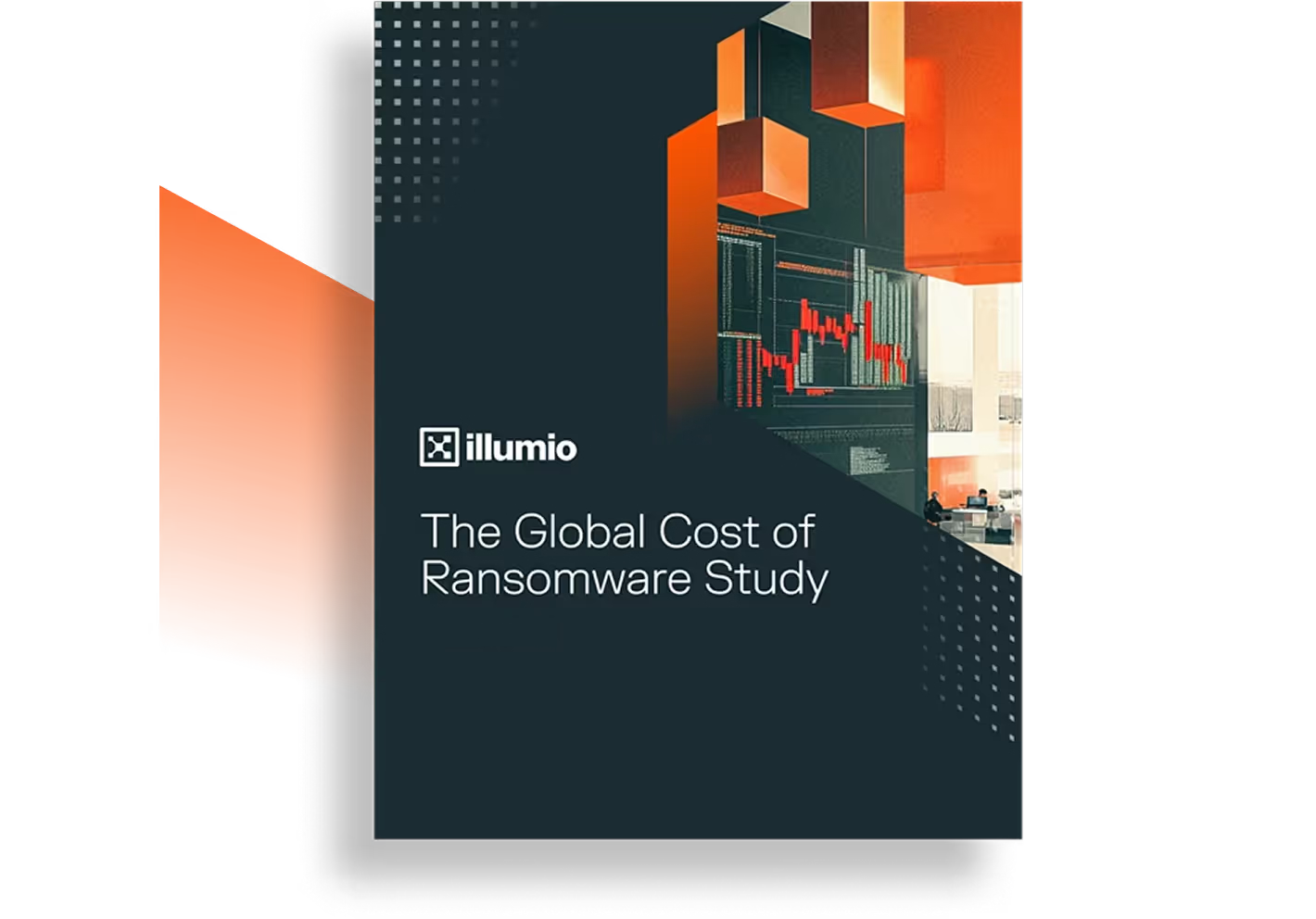
ランサムウェアの世界的なコスト調査
ランサムウェアの本当の影響と、次の避けられない攻撃に対する回復力を維持するための戦略を明らかにします。

マリオット・バケーションズがIllumioを活用してデータとグローバルオペレーションを保護する方法

Ransomware frequently asked questions
Everything you need to know about ransomware containment, lateral movement, and breach recovery.
The core mechanism is microsegmentation. Ransomware always needs specific internal protocols to move from one system to the next. Illumio maps those protocols across your hybrid multi-cloud environment and enforces controls that block any movement outside of what you explicitly allow. When ransomware gets in through a phishing attack or a new exploit, it hits a wall before reaching anything critical. Infected workloads get isolated in minutes, not after a drawn-out investigation.
Lateral movement is what happens after ransomware gets its initial foothold. Instead of staying in one place, it hops across systems and workloads looking for data worth encrypting or stealing. Most networks are flat and implicitly trusting, which means there’s nothing stopping that movement once an attacker is inside. One compromised endpoint becomes 10, then 50. The initial breach is almost never where the real damage happens. The damage happens during lateral movement. That’s why stopping it matters more than improving initial detection.
The Illumio Global Cost of Ransomware Study quantifies the damage. Nearly 90% of organizations faced at least one attack in the past year. Of those, 58% had to shut down operations, and only 13% recovered all their encrypted data. Paying the ransom doesn’t change those odds much, especially now that double extortion is standard practice. Attackers take a copy of your data before they lock it, so the threat of a public leak stays on the table even after you pay. The companies that fared best were the ones that limited how far ransomware could travel once it was inside.
Double extortion is when attackers steal your data before encrypting it, then threaten to publish it publicly if you don’t pay. The ransom now buys silence as much as it buys a decryption key. In practice, paying doesn’t guarantee the stolen data stays private. The only reliable way to reduce that threat is to limit how much data ransomware can access in the first place, which requires controlling lateral movement before attackers reach sensitive systems.
Detection tools do exactly what they say. They detect. They send an alert, log an event, and wait for a human to act. By the time that alert reaches someone who can investigate it, ransomware has typically moved to more systems. The gap between when an alert fires and when a response is completed is where most of the damage happens. Illumio works on the other side of that problem by enforcing segmentation controls that block lateral movement in real time. There’s no alert triage, and you don’t have to redesign your network.