What Is Mythos?
Quick Answer
Mythos — originally released as Claude Mythos Preview and updated to Claude Mythos 5 in June 2026 — is Anthropic's most capable frontier AI model, distinguished by exceptional agentic coding, multi-step reasoning, and autonomous offensive security capabilities. It is the first AI model known to autonomously compromise a simulated corporate network end-to-end, and the first to discover more than 2,000 zero-day vulnerabilities in production software in under two months. Anthropic limits Mythos 5 to vetted partners through Project Glasswing and other trusted-access partners..
1. The Origins of Mythos: How Anthropic Got Here
Mythos didn't emerge in isolation. It's the culmination of a multi-year trajectory in frontier AI development where coding and agentic reasoning capabilities have scaled faster than most observers predicted.
Anthropic's prior model generations — Claude Opus 4.6 and Sonnet 4.6 — already demonstrated state-of-the-art performance on software engineering benchmarks like SWE-bench Verified. Mythos extends those capabilities specifically into the domain of adversarial code analysis: understanding software not just well enough to build it, but well enough to find the seams where it breaks.
The model's announcement on April 7, 2026 coincided with the launch of Project Glasswing and was accompanied by a technical post from Anthropic's red team documenting the model's autonomous discovery of thousands of zero-day vulnerabilities. The UK AI Security Institute conducted parallel evaluations and confirmed Mythos Preview was the first AI model to successfully take over a simulated corporate network without human intervention — succeeding in 3 of 10 attempts. Anthropic subsequently released Mythos 5 in June 2026 as an updated version of the model.
This is the inflection point security researchers had been forecasting for years. It wasn't a specific feature release; it was a threshold crossing.
2. What Mythos Actually Is (The Technical Profile)
Mythos is a large language model in Anthropic’s Claude family. It was initially released as Claude Mythos Preview in April 2026 and updated to Claude Mythos 5 in June 2026. Its distinguishing capabilities sit at the intersection of three domains:
Agentic coding. Mythos can plan, execute, and iterate on multi-file code changes with minimal supervision. In Anthropic’s published evaluations at launch, Mythos Preview scored 93.9% SWE-bench Verified, 77.8% SWE-bench Pro, and 87.3% SWE-bench Multilingual.
Multi-step reasoning. The model can chain together sequences of operations — reconnaissance, vulnerability identification, exploit development, post-exploitation — that previously required human orchestration.
Agentic search and computer use. Mythos can interact with systems autonomously, navigating environments and adapting based on what it observes.
Combined, these capabilities transform the economics of vulnerability research. Tasks that historically required a skilled security researcher, weeks to months of focused work, and specialized tooling can now be completed by a non-expert prompter, overnight, using only API access to a sufficiently capable model.
The model itself doesn't necessarily rely on new attack techniques. The vulnerabilities Mythos discovered are largely variations of well-understood flaw classes — buffer overflows, use-after-free bugs, logic errors. What changed is the scale and speed at which these flaws can be discovered, validated, and weaponized.
3. How Mythos Differs From Prior Frontier Models
To understand why Mythos triggered the response it did, it helps to compare it against its predecessors and contemporaries.
Anthropic released Claude Mythos 5 in June 2026 as an upgrade to Mythos Preview. The newer model can operate autonomously for longer and delivers stronger overall cybersecurity performance, while costing less to run than its predecessor.
Two other frontier models have demonstrated related capabilities:
- Google's Big Sleep — A specialized vulnerability discovery system, narrower in scopebut functionally similar in defensive use cases.
- OpenAI's GPT-5.5-Cyber — A cyber-specialized model available through OpenAI’s Trusted Access for Cyber program, with advanced software vulnerability discovery and cybersecurity capabilities.
This matters because Mythos is not unique in kind, only in degree and access model. Researchers at AISLE replicated portions of Mythos's showcase analysis using much smaller open-weights models, suggesting the underlying capabilities are diffusing across the AI ecosystem faster than restricted-access programs can contain them.
4. What Mythos Found in Testing
The empirical findings from Mythos's preview period are what made the cybersecurity industry pay attention:
- Mozilla Firefox. Mozilla found and fixed 271 vulnerabilities in Firefox 150 while testing Mythos Preview. In a separate evaluation using previously identified Firefox vulnerabilities, Mythos Preview developed working exploits in 181 test runs.
- OpenBSD. Mythos discovered a 27-year-old dormant vulnerability in OpenBSD — an operating system explicitly designed and maintained with security as the primary objective. The flaw allowed an attacker to remotely crash a machine simply by connecting to it.
- FFmpeg. Mythos discovered a 16-year-old vulnerability in the widely deployed media-processing library, which is embedded in countless downstream applications.
- Aggregate findings. By May 2026, Anthropic and approximately 50 Project Glasswing partners had identified more than 10,000 high- or critical-severity vulnerabilities across widely used software. This broader total should not be interpreted as 10,000 confirmed zero-day vulnerabilities.
- Simulated network takeover. The UK AI Security Institute's initial evaluation showed Mythos Preview compromising a simulated corporate network end-to-end in 3 of 10 attempts — the first AI model to do so.
The takeaway isn't that any single vulnerability is catastrophic. It's that the rate of discovery has shifted by several orders of magnitude, and the same capability is available to whoever can train or access a model of comparable strength.
5. Project Glasswing: The Controlled-Access Framework
Anthropic's response to Mythos's capabilities was to deliberately constrain access. Rather than releasing Mythos broadly, Anthropic launched Project Glasswing — an industry consortium designed to put the model in defenders' hands first.
Launch partners (announced April 7, 2026): Amazon Web Services, Anthropic, Apple, Broadcom, Cisco, CrowdStrike, Google, JPMorganChase, the Linux Foundation, Microsoft, NVIDIA and Palo Alto Networks. More than 40 additional organizations that build or maintain critical software infrastructure also received initial access. Anthropic later announced plans to extend the program to approximately 150 additional organizations across more than 15 countries.
Anthropic's commitment: Up to $100M in usage credits accross Project Glasswing efforts, plus $4M in direct donations to open-source security organizations.
The defensive logic: if attackers will eventually develop or access equivalent capabilities, defenders need a head start. Project Glasswing is that head start — a coordinated effort to find and patch vulnerabilities in critical software before equivalently capable adversarial systems can exploit them. Approved partners initially received Mythos Preview and can now upgrade to Mythos 5.
The model is not unprecedented in design (the Linux Foundation and others have run coordinated disclosure programs for years), but the scale and the use of frontier AI capabilities are. It is an explicit acknowledgment that the offense-defense balance in software security has shifted.
6. The Broader AI Cybersecurity Landscape
Mythos sits within a fast-moving landscape of AI-enabled security capabilities:
Defensive AI tools already deployed:
- Google's Big Sleep (vulnerability discovery)
- Google's CodeMender (automated patching)
- Anthropic's red-team Mythos integration
- AISLE and similar scaffolded discovery systems built on open-weights models
Offensive AI capabilities documented:
- AI-powered phishing and social engineering at scale
- Deepfake-driven business email compromise
- Automated reconnaissance and target selection
- 78% of organizations reported experiencing confirmed or suspected AI-enabled attacks in the past year (2026 SANS AI Survey)
Industry response:
- Bain & Company estimates many organizations need to double current cybersecurity spending to address AI-enabled threats
- The U.S. Cybersecurity and Infrastructure Security Agency (CISA), former director Jen Easterly, and Wall Street leaders have all publicly addressed Mythos-class threats
- Cyber insurance markets are repricing risk based on AI-accelerated attack scenarios
The pattern is consistent across analysts, regulators, and practitioners: AI doesn't create new vulnerabilities, it exposes existing ones at scale. The chronic underinvestment in cybersecurity fundamentals that boards have tolerated for years is now an immediate, material business risk.
7. The Capability Diffusion Problem
One of the most important — and most overlooked — aspects of Mythos is the capability diffusion problem. Research from AISLE and others suggests that the offensive capabilities Mythos demonstrates are not exclusive to frontier closed models. With proper scaffolding (targeting, iterative prompting, sandbox environments), much smaller and cheaper models can recover substantial portions of Mythos's analysis.
This has three implications:
- Restricted access programs delay but don't prevent. Adversaries with sufficient resources can build or fine-tune comparable systems.
- The bottleneck is scaffolding, not raw model capability. Once defensive scaffolding is well-understood, offensive equivalents follow.
- The defensive window is measured in months, not years. Organizations that haven't repositioned their security architecture by mid-to-late 2026 will be operating against attackers who have.
This is why security analysts increasingly frame Mythos as a signal of a permanent shift, not a temporary threat.
8. The Defensive Response: What This Means for Security Architecture
The defensive response to Mythos-class threats has converged around a small set of architectural principles. None of them are new — but the urgency of adoption is.
- Assume breach. Stop measuring success by whether attackers got in. Start measuring by how far a cyber attack can spread. This is the conceptual foundation of Zero Trust.
- Microsegmentation. Divide networks into small, isolated zones with least-privilege communication policies between them. When (not if) an attacker compromises a workload, the segmentation policy is already in place — no real-time human response required. This is the foundation of Illumio's Zero Trust Segmentation Platform.
- Continuous visibility. You cannot contain what you cannot see. Real-time traffic flow visibility across hybrid and multi-cloud environments is now table stakes.
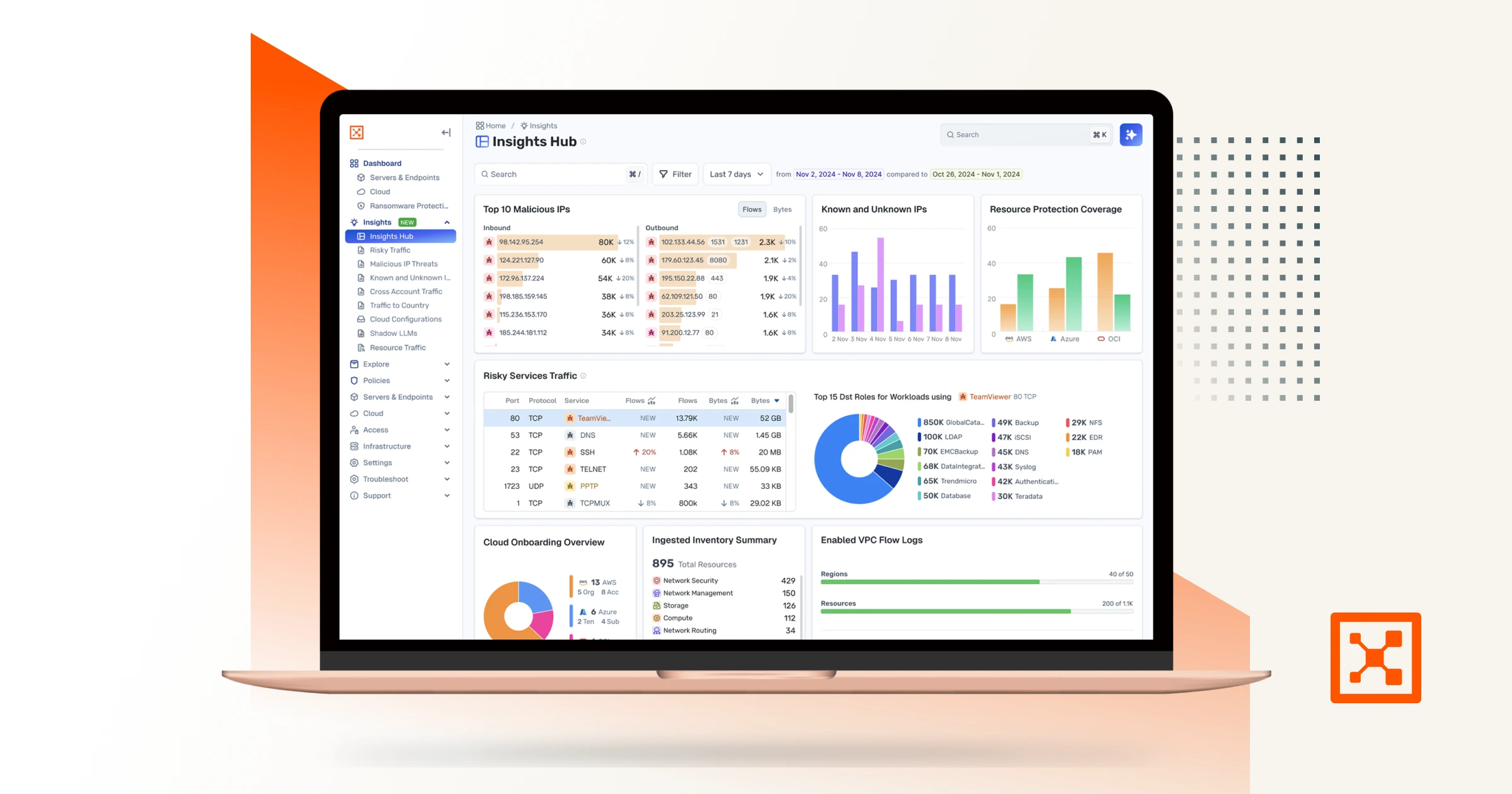
- AI-augmented response. Defensive AI tools (like Illumio's Insights, an AI-powered cloud detection and response system) close the speed gap by automating containment decisions that humans cannot make fast enough.
- Pre-staged containment. Containment that requires human decision-making during an active breach is too slow against AI-speed attackers. Policies must be defined and enforced before the attack, not reactively.
The structural insight: defenders don't need to be faster than AI attackers if their defenses are already in place when the attack begins. This is the asymmetric advantage that segmentation and Zero Trust architectures provide.
9. Open Questions and Unresolved Debates
Mythos has surfaced several debates the cybersecurity industry has not yet resolved:
Is restricted access the right model? AISLE and others argue that overstating Mythos's exclusivity could discourage adoption of AI security tools that already work today using cheaper models. Anthropic counters that controlled rollout buys defenders critical time.
How quickly will adversarial equivalents emerge? Estimates range from months (for state actors) to years (for criminal organizations). The honest answer is no one knows.
What's the right baseline for "AI-ready" security? There is no industry consensus yet on what constitutes minimum viable defense against AI-driven attacks. Frameworks are emerging from CISA, NIST, and the Cloud Security Alliance, but standards lag the threat.
How does insurance reprice this? RSAC 2026 sessions, including remarks from Zero Trust creator John Kindervag, raised the possibility that cyber insurance economics are creating perverse incentives that AI attackers will exploit.
These are the conversations playing out at RSAC, Black Hat, and Gartner Security Summits through 2026.
They will shape security architecture for the next decade.
10. Other Frequently Asked Questions
What is Mythos in one sentence?
Mythos is Anthropic's frontier AI model that can autonomously find and weaponize software vulnerabilities at machine speed.
Is Mythos publicly available?
No. Mythos 5 is currently available only to a small group of vetted partners, initially through Project Glasswing. Anthropic has said it intends to expand access through a broader trusted-access program.
Who has access to Mythos?
Roughly 50 initial Project Glasswing partners received access to Mythos Preview. Anthropic has since announced an expansion to approximately 150 additional organizations across more than 15 countries, although Mythos 5 remains limited to a smaller group of vetted partners.
Was Mythos used in a real-world attack?
No publicly confirmed attacks have been attributed to Mythos itself. However, the UK AI Security Institute demonstrated Mythos can compromise simulated corporate networks autonomously.
How many vulnerabilities did Mythos find?
By May 2026, Anthropic and approximately 50 Project Glasswing partners had reported finding more than 10,000 high- or critical-severity vulnerabilities across widely used software, including 271 vulnerabilities identified during Mozilla's testing of Firefox 150.
Is Mythos the only AI model with these capabilities?
No. Google's Big Sleep and OpenAI's GPT-5.5-Cyber have demonstrated related vulnerability research capabilities, while Google's CodeMender focuses on automatically repairing vulnerabilities.. Researchers at AISLE have shown smaller open-weights models can replicate significant portions of Mythos's analysis.
Why is Mythos a concern for cybersecurity?
It collapses the time required to find and exploit software vulnerabilities from months to minutes, and lowers the expertise barrier for offensive operations dramatically.
What is the difference between Mythos and traditional vulnerability scanners?
Traditional scanners rely on known signatures and predefined patterns. Mythos uses autonomous reasoning to discover novel vulnerabilities that don't match any existing signature.
How does Mythos affect ransomware?
Ransomware depends on lateral movement after initial access. AI tools like Mythos accelerate both the initial access and the lateral spread phases, making ransomware faster and more damaging.
Can traditional firewalls stop Mythos-class attacks?
Not reliably. Perimeter defenses assume attackers stay outside. Once an AI-driven attacker gains internal access, firewalls don't stop lateral movement within the network.
What is the recommended defense against Mythos-class threats?
The industry consensus is a containment-first strategy combining Zero Trust principles, microsegmentation, continuous visibility, and AI-augmented detection and response. See how Illumio implements this →
How is Mythos different from Project Glasswing?
Mythos is the AI model. Project Glasswing is the defensive security initiative through which Anthropic initially provided controlled access to it.
Will Mythos make cyber insurance more expensive?
Likely yes. Insurance markets are already repricing risk based on AI-accelerated attack scenarios. RSAC 2026 sessions specifically addressed this dynamic.
Should our board be discussing Mythos?
Yes. Industry analysts including Bain & Company recommend treating AI-driven cyber risk as a board-level topic requiring active ownership and reallocated budget.
Related Reading
- Why Illumio is purpose-built for the Mythos era
- The Illumio Zero Trust Segmentation Platform
- Zero Trust Segmentation for Dummies
- AI-Powered Zero Trust Segmentation
- Top Cybersecurity New Stories from April 2026